BIODIVERSITY HUB
Natural history exhibits such as the UPIB-EDC Biodiversity Hub aim to share the beauty and wonder of the natural world with the general public.
The Vertebrate Museum, Invertebrate Museum, Herbarium, and Arboretum all function as facilities within which specimens of Philippine biodiversity are preserved and studied. In addition, the Biodiversity Hub provides a venue for engagement, where people can learn about the state of our country’s rich wildlife and what they can do to contribute to the protection of these unique natural resources.
By clicking through the tabs below, you can take a virtual tour of the Biodiversity Hub’s facilities, and find out what activities and services each one provides.
The Threatened Species Arboretum was established at the UP Institute of Biology (UPIB) in partnership with the geothermal company, Energy Development Corporation. EDC’s BINHI Foundation is a national greening initiative that has established multiple nurseries and arboretums across the country in an effort to protect our threatened tree species.
Inaugurated in December 2014, the one-hectare UPIB-EDC BINHI Threatened Species Arboretum contains around 70 species and functions as a living laboratory – educating visitors about our rich biodiversity while also serving as a gene and seedling bank for threatened trees. The arboretum was designed to depict several of the Philippines’ distinct forest formations, with each section containing different species suited to that formation. Other features of the arboretum include the fernery and a memorial to Leonard Co.
In 2020, the Threatened Species Arboretum (together with the Jose Vera Santos Memorial Herbarium) received the Gawad Tsanselor award for “Natatanging Programang Pang-Ekstensiyon” for its work in educating students, researchers, and communities about the country’s unique natural resources.
Curators:
Jonathan A. Anticamara, PhD (jaanticamara@up.edu.ph)
Christine Jewel C. Uy-Yabut, PhD (ccuyyabut@up.edu.ph)
Certificate of Identification Request for:
A. Marine Invertebrates and Fish Species Section:
1. Send email request to Dr. Jonathan A. Anticamara (jaanticamara@up.edu.ph)
and include the following information:
a. Name(s)
b. Name of School or Company
c. Taxa of specimens for ID (e.g., fish, mollusks, etc.) NOTE: For non-
invertebrate and non-fish taxa (e.g. plants, mammals, etc.)
d. Purpose of certification/authentication
e. Date collected
f. Collection Site
g. Contact Number
h. Email
i. Name and e-mail of Faculty Adviser (if certification is for thesis purposes)
j. Include a copy of the Gratuitous Permit(s) for specimens collected in the wild
(https://www.bfar.da.gov.ph/wp-content/uploads/2021/04/FAO-No.-233-s.-2010.pdf)
k. Photo of your specimens(s) before preserving in alcohol
B. Insect Section
a. Scan the QR code to access the official Insect ID Request form (see below)
b. Fill out the form completely and accurately
c. Submit the form and wait for the confirmation email from the Curator (Dr.
Christine Jewel C. Uy-Yabut)
d. Submit your specimen to Rm 138 (Office of the Curator – Insect Section).
NOTE: If Dr. Uy-Yabut is unavailable, proceed to Rm 129 (look for Ms. Abigail
Garcia) or Rm 130 (look for Ms. Julie Ann Gregorio)
e. Further instructions regarding payment will be provided upon submission of
the specimen(s)
Fees for Certificate of Identification:
| Non-UP students | Non-UP and Non-Students | UP and non-Students |
| Php 300.00 | Php 500.00 | Php 500.00 |
Specimen Submission Guidelines:
Preservation Requirements:
- Soft-bodied specimens or those containing living tissue: preserve in 70% ethyl
alcohol (sealed container) or freeze before submission - Dried specimens (e.g., empty shells): no preservation fluid required
- For insects: preserve in 70% to 95% ethyl alcohol (sealed container); for moths
and butterflies – can be submitted dried
Sorting and Labeling:
- Sort specimens according to morphospecies before submission
- Label containers appropriately
- Download and use the official label template (link:
https://drive.google.com/file/d/13T350YNdOJvICsFXZrrK2p32SJHIr9b9/view?usp=dr
ive_link)
Submission Process:
- Wait for a confirmation email before dropping off specimens
- Payment will be made upon submission
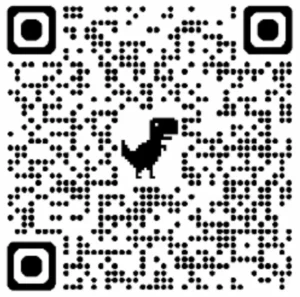
UPDIM Insect Section
Official ID Request Form
Curators:
Mariano Roy M. Duya, PhD
Carmela P. Española, PhD
The Institute of Biology’s Vertebrate Museum houses almost 1,300 skin specimens of terrestrial vertebrates collected from the 1950s to the 1980s. Another set of specimens, numbering into thousands, have been collected since the 1990s, preserved in fluid and are currently being catalogued. The Vertebrate Museum offers guided tours upon advanced request and species identification. We also provide training on various terrestrial wildlife survey techniques.
The UP Wild is an online social media page designed to highlight the value of green spaces and urban biodiversity within the UP Diliman campus. Through short narrative features accompanied by photos or videos, the page strives to connect netizens with nature, providing glimpses of the life history, ecology, and importance of various flora, fauna, and fungi.
Beyond this, The UP Wild also fosters community by conducting nature walks, hosting workshops for citizen science, and organizing campus bioblitzes. Learn more by visiting https://www.facebook.com/UPwild.